fox nut, Euryale ferox, makhana, gorgon plant

May 15, 2008 by y

Fox nut is a type of seed we add into our weekly cereal or soup on a regular basis to help maintain overall health. My mom says it specifically helped her aging eyes and sight – over a period of time. She also says it is good for the lower back and knees, and I found that it is used as a treatment for arthritis and rheumatic pains. It is in the waterlily family and is traditionally known as analgesic, aphrodisiac, astringent, deobstruent, oxytoxic, and tonic. Like chrysanthemums, there are no side effects, nor drug interactions, to worry about when eating fox nut. I don’t think of it as an herb, but more…a seed, as is the case, like pumpkin seed or sunflower seed. In traditional Indian medicine, fox nut is given to mothers after child birth and invalids (see Who’s done the research) to stimulate their immune systems.

How to cook/eat fox nut: Fox nut is often cooked with other seeds, grains, or beans. We usually cook it into our cereal mixture which includes barley, as it goes well with barley. When cooked, both seem to open up and have a similar chewy texture. In India, people roast fox nut like popcorn and eat it with various spices and oils. I found a catalogue that sold “Fox Nut Puffed (Makhana), organic: toss in dash of ghani-oil for a nutritious and crunchy popcorn substitute that all kids love” – sounds quite yummy, I ought to try it.

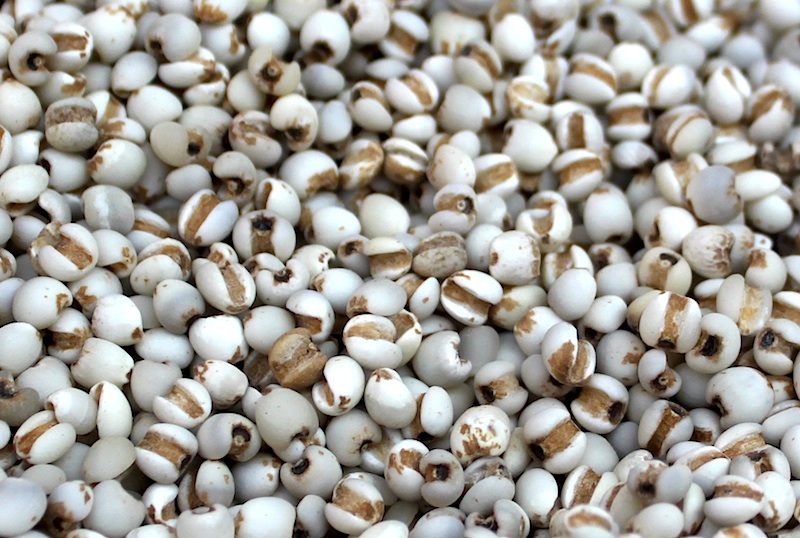
Where to find it: Fox nut can be found in your local Asian grocery store. They are dry and powdery, round seeds, usually cut in half and chalky white on the inside, with a brown outer covering. They are usually sold in clear plastic packaging.

What else: Okay, I found out from a Google search that fox nut has also been used to burn fat as part of a weight loss treatment. Generally, fox nut is associated with the kidney and spleen and mixed with an assortment of other items to treat various illnesses.

Who’s done the research:

  • Fox nut or gorgon nut (Euryale ferox–Family Nymphaeaceae), popularly known as Makhana, has been widely used in traditional oriental medicine to cure a variety of diseases including kidney problems, chronic diarrhea, excessive leucorrhea and hypofunction of the spleen. Based on the recent studies revealing antioxidant activities of Euryale ferox and its glucosides composition, we sought to determine if Euryale ferox seeds (Makhana) could reduce myocardial ischemic reperfusion injury. In vitro studies revealed that Makhana extracts had potent reactive oxygen species scavenging activities. Taken together, the results of this study demonstrate cardioprotective properties of Makhana and suggest that such cardioprotective properties may be linked with the ability of makhana to induce TRP32 and Trx-1 proteins and to scavenge ROS. - Das S, et al. The effect of Euryale ferox (Makhana), an herb of aquatic origin, on myocardial ischemic reperfusion injury. Mol Cell Biochem 289(1-2):55-63, Sep 2006
  • Euryale ferox (Tel makhana(1)), Phoenix dactylifera (Chhohara(1)) and Zingiber officinale (Sonth(1)), however, stimulated humoral immunity to a greater extent than CMI. The observation provides scientific basis for feeding the products of above plants to mothers after child birth and to invalids with a relatively poor immune status. - Puri A, et al. Immunostimulant activity of dry fruits and plant materials used in indian traditional medical system for mothers after child birth and invalids. J Ethnopharmacol 71(1-2):89-92, July 2000
  • In indigenous medical systems of medicine, E. ferox as a tonic and for the treatment of leucorrhoea. - Bhakuni, D.S., Dhar, M.L., Dhar, M.M., Dhawan, B.N. and Mehrotra, B.N., 1969. Screening of Indian plants for biological activity: Part II. Indian Journal of Experimental Biology 7, pp. 250–262.
  • Euryale ferox has been widely used in traditional oriental medicine to treat a variety of illness. However, very little is known about the cellular actions by which this plant mediates its therapeutic effects. Various aspects of antioxidant activity were evaluated in total extracts and fractions derived from Euryale ferox. Our findings show that Euryale ferox contains a significant antioxidant activity and that specific components in the ethyl acetate and butanol fractions may play an important role in mediating these antioxidant properties. – Lee SE, et al, Antioxidant activity of extracts from Euryale ferox seed. Exp Mol Med 31;34(2):100-6, May 2002
  • In a search for bioactive constituents of crude drugs derived from aquatic plants, the constituents of Euryale ferox Salisb. (Nymphae-aceae) were investigated. This plant has been widely used in traditional oriental medicine to treat a variety of diseases, such as kidney problems, chronic diarrhea, excessive leucorrhea, and hypofunction of the spleen. Recent studies show that E. ferox could reduce myocardial ischemic reperfusion injury and exhibits immunostimulant activity. The seeds of E. ferox contain an extraordinarily high content of tocopherols, which may play a role in the antioxidative activity of this plant. - Row LC, et al, Cerebrosides and tocopherol trimers from the seeds of Euryale ferox. J Nat Prod 70(7):1214-7, Jul 2007

goji berries, wolfberries, lycium barbarum

May 13, 2008 by y

Whenever any of my family feel eye fatigue from staring at the computer screen for too long, reading, or just during a bout of mid-afternoon weariness, we throw a handful of goji berries, or wolfberries, into the bottom of a mug, pour hot boiling water into it, let it steep, and drink, finishing up with a bunch of interestingly texturized berries in our mouths. Soon afterwards, our eyes are relieved.

Goji berries are in the category of herbal remedies that have some immediate and noticeable effects on our bodies. As you know, preventive and alternative approaches do not regularly work as fast as mainstream, curative approaches. However, we find that our bodies – whether or not it’s bit-placebo – seem to respond more quickly to the intake of goji berries, and our eyes are immediately soothed. That is, we don’t have to wait days, weeks, or even a month, to feel the effect. In an age where you can Google and make a connection between any two phrases or words, I want to be careful that I do not force any super-power foods on anyone. Like I said, I’m just going to share with you the remedies that have worked in my personal circle of family and friends.

Also known by its Latin name, Lycium barbarum, the goji berry has been used in Chinese medicine to treat liver, kidney, and eye-related diseases. It’s also known as an energizer. Scroll down to “Who’s done the research” for summarized findings on more health benefits from goji berries.

How to make goji tea (Quick-and-dirty version): Yes, truly dirty. Toss a small handful of dried – and hopefully plump – goji berries into a mug or cup, and bring a pot of water to boil. Pour boiling water into your mug, and put a lid over it – any lid will do, even a piece of cardboard. Let it steep for two to three minutes. By the time you remove the lid, the goji berries will have float back onto the top, even more plump with tea. And, it’s probably the perfect temperature for drinking. Don’t forget to chew up the delicious berries when you’re done. I also often leave a bit of the remaining liquid in my mug, since it seems some dirt falls away from the berries and sinks to the bottom.

Where to find it: At your local Chinese grocery store, of course. On the streets in Chinatown, they also have beautiful goji berries sitting in bins, along with a variety of other dried herbs. When picking a bag of goji berries, don’t go for the brightly orange types. Nor the fluffy, Uncle-Ben-rice-looking berries. Go for something almost a little loosely, a little stickily packed, not too dark and not too bright, just an in-between reddish color. You will see what I mean when you’ve got the choices in front of you. Those taste the most delicious. The brightly orange ones are usually too tart or the flavor has somehow escaped. The fluffy ones are also less flavorful and seem to be harder and less plump, even after they’re sitting in a cup of hot water. But don’t worry if you buy the wrong variety – it’s all trial and error.

What else: Goji berries are also known as matrimony berries, the fruits of the Matrimony Vine. I’ve only seen that label once on the packaging of a bag I bought from Chinatown. Subsequent purchases have been labeled simply, “Lycium barbarum” or ”Fructus lycii.” Just my luck because I won’t ever forget my embarrassment one time, while serving the tea for a friend who asked me what I was serving. I took a look at the package and sheepishly answered, “matrimony berries.”

Who’s done the research:

  • Results have shown that daily consumption of GoChi for 14 days increases subjective feelings of general well-being, and improves neurologic/psychologic performance and gastrointestinal functions. The data strongly suggest that further research is indicated to confirm and extend knowledge of the potential effects of Lycium barbarum upon human health. - Amagase H, et al. A Randomized, Double-Blind, Placebo-Controlled, Clinical Study of the General Effects of a Standardized Lycium barbarum (Goji) Juice, GoChi(). J Altern Complement Med, 2008 Apr 30
  • Lycium barbarum is well known for nourishing the liver, and in turn, improving the eyesight. However, many people have forgotten its anti-aging properties. Despite the fact that L. barbarum has been used for centuries, its beneficial effects to our bodies have not been comprehensively studied with modern technology to unravel its therapeutic effects at the biochemical level. Recently, our laboratory has demonstrated its neuroprotective effects to counter neuronal loss in neurodegenerative diseases. We have accumulated scientific evidence for its anti-aging effects that should be highlighted for modern preventive medicine. - Chang RC, et al. Use of Anti-aging Herbal Medicine, Lycium barbarum, Against Aging-associated Diseases. What Do We Know So Far? Cell Mol Neurobiol, 2007 Aug 21
  • Chinese medicinal herbs have been consumed for thousands of years for the purpose of healthy aging. Lycium barbarum is valued in Chinese culture for its benefits to anti-aging, vision, kidney and liver. Recent studies showed that extracts from L. barbarum possess biological activities including anti-aging, anti-tumor, immune-stimulatory and cytoprotection. Most of these studies emphasized that the protective function of L. barbarum is due to its anti-oxidative effects. The extract from L. barbarum is not simply an anti-oxidant; it can also exhibit cytoprotective effects against reducing stress by DTT. - Yu MS, et al. Cytoprotective effects of Lycium barbarum against reducing stress on endoplasmic reticulum. Int J Mol Med 17(6):1157-61, Jun 2006
  • Age-related macular degeneration (AMD) is a common disorder that causes irreversible loss of central vision. Increased intake of foods containing zeaxanthin may be effective in preventing AMD because the macula accumulates zeaxanthin and lutein, oxygenated carotenoids with antioxidant and blue light-absorbing properties. Lycium barbarum L. is a small red berry known as Fructus lycii and wolfberry in the West, and Kei Tze and Gou Qi Zi in Asia. Wolfberry is rich in zeaxanthin dipalmitate, and is valued in Chinese culture for being good for vision. This human supplementation trial shows that zeaxanthin in whole wolfberries is bioavailable and that intake of a modest daily amount markedly increases fasting plasma zeaxanthin levels. These new data will support further study of dietary strategies to maintain macular pigment density. - Cheng CY, et al. Fasting plasma zeaxanthin response to Fructus barbarum L. (wolfberry; Kei Tze) in a food-based human supplementation trial. Br J Nutr 93(1):123-30, Jan 2005
  • We have proved our hypothesis by showing neuroprotective effects of the extract from L. barbarum. Study on anti-aging herbal medicine like L. barbarum may open a new therapeutic window for the prevention of as Alzheimer’s disease. - Yu MS, et al. Neuroprotective effects of anti-aging oriental medicine Lycium barbarum against beta-amyloid peptide neurotoxicity. Exp Gerontol 40(8-9):716-27, Aug-Sep 2005

spinach

May 10, 2008 by y

Living in the city, I know that there’s bad air without having to breathe it in. But when the American Lung Association officially stamps it as one of the Top 10 most polluted US cities – okay, just by ozone – I have to make sure that I’m doing my best to treat these lungs nicely for putting up with me – without going to those Japanese oxygen-therapy places.

Since the last post recognized the connection between eating watercress and developing stronger, healthier lungs, I have to follow it up with the spinach – no, not exactly Popeye’s spinach. Spinach is so easily accessible here, it really shouldn’t come from a can.

Ever been on the receiving end of, “Eat your spinach?” It’s not only because they’re deliciously green and look so healthy. In fact, spinach is full of healthy benefits, including cleaning the lungs. Although watercress has been proven – in my family – to clear my congested lungs and cure my brother’s near asthmatic symptoms (including wheezing), my mom also liked to toss in a dose of spinach into our meals once a week. When my dad had a bit of the coughing fits – coughing day and night to clear up on-the-job pollutants – my mom steamed and boiled a batch of spinach for him to eat. After two to three days of eating spinach, he stopped coughing. I asked my mom, “Why didn’t you try watercress?” Her reply was, “Watercress takes longer; spinach is a faster relief for polluted lungs.” Well, that’s all the experimenting we have done.

How to cook spinach: Spinach is a dirty vegetable. Yes, it grows close to the ground, and often comes with plenty of soil and, sometimes, bugs. After thoroughly washing it and soaking it in fresh water as many times as one is obsessive, it is still best to cook it thoroughly, in my opinion. Since this is laughably not a cooking site, I’ll explain how to cook spinach in noodle soup. When your noodles and/or contents are almost done cooking, toss in the fresh and cleaned spinach. Boil a good full minute or two. Add your choice of various oils and/or spices, and it’s good to eat. Ah, here’s an advantage for cooked over uncooked spinach: Cooked spinach ensures that you eat plenty of it.

Where to find it: You can find spinach in your local grocery store and in Chinatown vegetable stands. Again, don’t look for them in cans. Like watercress, they are also found in batches. My local Korean fruit and vegetable stand recently acquired the savoy variety of spinach, with a bit of curls. Tastes the same.

What else:  We generally enjoy our spinach steamed, boiled, sautéed, or in noodle or plain soup. Cooking spinach loses the iron and other soluble elements, but spinach is chock full of other nutrients, including vitamins K, A, C, B2, B6, B1, E, B3; and the following: manganese, folate, magnesium, iron, calcium, potassium, tryptophan, dietary fiber, copper, protein, phosphorus, zinc, omega 3 fatty acids, and selenium.

Who’s done the research:

  • Spinach leaves, containing several active components, including flavonoids, exhibit antioxidative, antiproliferative, and antiinflammatory properties in biological systems. Spinach extracts have been demonstrated to exert numerous beneficial effects, such as chemo- and central nervous system protection and anticancer and antiaging functions. A powerful, water-soluble, natural antioxidant mixture (NAO), which specifically inhibits the lipoxygenase enzyme, was isolated from spinach leaves. NAO has been found to be nonmutagenic and has shown promising anticarcinogenic effects in a few experimental models, such as skin and prostate cancer; it has not shown any target-organ toxicity or side effects. The current review provides epidemiological and preclinical data supporting the efficacy of extracts of spinach and the safety of its consumption. - Lomnitski L, et al. Composition, efficacy, and safety of spinach extracts. Nutr Cancer 46(2):222-31, 2003
  • The major dietary sources of lutein in subjects with colon cancer and in control subjects were spinach, broccoli, lettuce, tomatoes, oranges and orange juice, carrots, celery, and greens. These data suggest that incorporating these foods into the diet may help reduce the risk of developing colon cancer. - Slattery ML, et al. Carotenoids and colon cancer. Am J Clin Nutr 71:575-82, 2000
  • High intake of cruciferous vegetables, including broccoli and cauliflower, may be associated with reduced risk of aggressive prostate cancer, particularly extraprostatic disease. - Kirsh VA, et al. Prospective study of fruit and vegetable intake and risk of prostate cancer. J Natl Cancer Inst 99(15):1200-9, Aug 1, 2007

a thin cord of mugwort

May 8, 2008 by y

our father, the self-

taught botanist, is

stretching a thin

cord from the piano

to the back door

tying tiny bouquets

of the traveler’s

mugwort every six

inches down the line

to dry. each bouquet

of ten delicate

sprigs carries more

than just traveler’s

luck, but his signature

love – the patient fruit

.

20070912:2347

y

watercress

May 8, 2008 by y

During a lengthy period of my youth, my mom said that I was breathing funny at night and always having lung congestion, with a lot of phlegm production. She said she did some research and decided that I should go on a watercress binge. For three to four weeks, my mom would cook up a pot of watercress soup three to four times a week, and she and I could eat four batches of watercress in one sitting. It was delicious! To this day, she says the transformation to healthy breathing happened quickly because I was a youngster at the time, but sure enough, I gradually had no more trouble with lung congestion, even to this day. As with most edible “treatments,” Mom continues to use watercress in her cooking ever so often because of its healthy benefits in clearing up the lungs.

How to make watercress soup: Starting off with a pot of boiling chicken stock (made or bought), add one batch of watercress (or as much as you want) and add a bit of julienned ginger for more flavor. Let it boil for three to five minutes – the watercress tastes best when it’s still got a slight crisp. Add salt and sesame oil, as needed.

Where to find it: You can find watercress in your local grocery store and in Chinatown vegetable stands. They are usually tied up in convenient batches.

What else: Doing some extra research last night, I found that – whether or not related – watercress has a chemopreventive agent against lung cancer in smokers. This does not mean that watercress can cure or prevent lung cancer, but it’s the first study to report an effect of vegetable consumption on metabolism of a lung carcinogen in humans – a protective effect. I’m not sure why it’s only specific to lungs, but you can check out the research done on tobacco smokers below and look up the research paper. In another study of nine plants used in Mexican traditional medicine to treat tuberculosis and other respiratory diseases, watercress showed the best antimycobacterial activity against Mycobacterium tuberculosis. Study cited below.

Who’s done the research:

  • The results of this study support our hypothesis that PEITC inhibits this oxidative metabolism of NNK in humans, as seen in rodents, and support further development of PEITC as a chemopreventive agent against lung cancer. This is the first study to report an effect of vegetable consumption on metabolism of a lung carcinogen in humans. - Hecht SS, et al. Effects of watercress consumption on metabolism of a tobacco-specific lung carcinogen in smokers. Cancer Epidemiol Biomarkers Prev. 4(8):877-84, Dec 1995
  • The study evaluated the antimycobacterial activity of nine plants used in Mexican traditional medicine to treat tuberculosis and other respiratory diseases. Nasturtium officinale (watercress) showed the best activity against the sensitive Mycobacterium tuberculosis. - Camacho-Corona Mdel R, et al. Activity against drug resistant-tuberculosis strains of plants used in Mexican traditional medicine to treat tuberculosis and other respiratory diseases. Phytother Res 22(1):82-5, Jan 2008
  • It was demonstrated that therapy with the herbal drug preparation in the indications acute sinusitis, acute bronchitis and acute urinary tract infection is–with regard to efficacy–comparable to a treatment with standard antibiotics. The test preparation displayed in all indications a significantly lower potential for adverse events compared to a treatment with standard antibiotics and, therefore, a better safety profile could be concluded. - Goos KH, et al. On-going investigations on efficacy and safety profile of a herbal drug containing nasturtium (watercress) herb and horseradish root in acute sinusitis, acute bronchitis and acute urinary tract infection in children in comparison with other antibiotic treatments. Arzneimittelforschung 57(4):238-46, 2007
  • The results support the theory that consumption of watercress can be linked to a reduced risk of cancer via decreased damage to DNA and possible modulation of antioxidant status by increasing carotenoid concentrations. - Gill CI, et al. Watercress supplementation in diet reduces lymphocyte DNA damage and alters blood antioxidant status in healthy adults. Am J Clin Nutr. 85(2):504-10, Feb 2007

mugwort, ai ye

May 5, 2008 by y

One afternoon last year, my mom developed a serious skin allergy while gardening in the backyard.  To this day, we haven’t determined whether it was poison ivy or something else, but it lasted several days – with no relief from select ointments.  She went to see a doctor who prescribed her with some anti-allergic drugs, to be taken regularly, in 24-hour intervals.  The doctor said it looked like poison ivy and would last as long as six to eight weeks.

The first time my mom took the prescribed medication, the itchiness abated for 20 hours; the second time she took it, the pill lasted for 12 hours.  After that, my mom – who prefers a natural fix over a pill any day – recalled the healing properties of a certain Artemisia vulgaris, or Mugwort.

Years ago, an older family friend had bouts of bad allergic skin reactions – with a wide stretch of rash in the same place from his waist to his thigh – whenever he came upon obscure grasses and plant growth in his yard.  My parents brought him some mugwort, which, soon after, relieved him of all symptoms.  He further strengthened his immune system with mugwort so that he was and is no longer super-allergic to various plant growth.

So my mom decided to try a mugwort bath that evening.  By this time, she had had rashes over her back for several days, and it was exacerbated by her inability to sleep peacefully.  Boiling a big pot of mugwort, she added this to a small bathing tub of water and soaked in the tub for less than half an hour, then dried off and went to bed.  By morning, the itchiness and redness was gone, although remnants of the rashes were still visible upon her skin.  As mentioned before, my mom is big believer of teas – so she decided to make mugwort tea the next evening, after doing some research on the side effects from intake.  Boiling a pot of fresh mugwort, she poured out a cup to drink and used the rest to mix into her bath water.  After just two to three days of drinking the tea and bathing in mugwort-steeped water, her allergic symptoms were all gone, and her skin was on its way to healing.  Thanks to the mugwort, my mom didn’t have to try her patience and pop pills for five to six more weeks.

To make Mugwort tea and bath (in that order, please!): Bring a pot of water with five tiny sprigs of mugworts to boil.  Let it boil for 15 more minutes, with the lid on or off.  Turn off heat and keep lid on for another 15 minutes.  Pour the liquid into a cup and drink.  Use remaining liquid to make bath:  Using a strainer, pour remaining tea or liquid into a bath tub – the smaller, the better – and add lukewarm-to-hot water.  Scalding water usually exacerbates rashes and itches, no matter how good it feels at the time!  Soak in tub for as long as you can stand it – at least 15 to 20 minutes.

Where to find it: In the United States, mugwort grows as a weed almost everywhere, among waste and alongside roadways.  It is probably due to the fact that the plant is commonly found along roadways that the mugwort was/is believed throughout history to protect the traveler from evil spirits and/or hungry animals in the wild.  Chances are, you can encounter mugwort in your yard or while driving more easily than you can find it in a grocery store – so that’s my suggestion.  Consult photos here and here before you make any herbal expeditions and come back with more skin rashes than remedy.

What else: The mugwort is also used as a digestive bitter and for treatment of liver disorders.  Unlike chrysanthemum and perilla tea, mugwort should not be taken internally for extended periods of time due to its high thujone (a toxin) levels.  Though thujone reportedly stimulates the immune system, too much of it can interfere with the brain and nervous system functions.  In addition, pregnant women should avoid taking too much mugwort due to its affect on menstruation maintenance and other reproductive system functions.

Who’s done the research:

  • In traditional medicine, Artemisia vulgaris (mugwort) is widely used for the treatment of diabetes, and extracts of the whole plant are used for epilepsy and in combination for psychoneurosis, depression, irritability, insomnia, anxiety, and stress.  - Walter HL, et al. Medical Botany, 2nd ed., p.345. John Wiley and Sons, New Jersey (2003)
  • Infusion of mugwort leaves is given as a vermifuge, and it is also commonly used in traditional European medicine as a choleretic and for amenorrhea and dysmenorrhea- Teixeira da Silva, J.A., et al. Mining the essential oils of the Anthemideae. Afr. J. Biotechnol. 3:706-720, 2004
  • In herbal medicine, aerial parts of the mugwort are being used as an anthelminthic, an antiseptic, an antispasmodic, and a tonic for vital organs and for various disorders including hepatosis- Duke, J.A., et al. Handbook of medicinal herbs, 2nd ed. CRC Press, Washington, D.C. (2002)
  • In various studies, the mugwort showed antibacterial activity.  - Cardini, F. and Weixin, H. Moxibustion for correction of breech presentation: a randomized controlled trial. J. Am. Med. Assoc. 280:1580-84, 1998
  • The mugwort’s crude extract has been used as an antimalarial agent for thousands of years, and it was found that artemisinin extracted from the plant had antitumor activity. - Sun, W.C., et al. Antitumor activites of 4 derivatives of artemisic acid and artemisinin B in vitro. Acta. Pharmacol. Sin. 13: 541-43, 1992
  • A paste or powder of the leaves is applied over skin diseases.  - Teixeira da Silva JA. Mining the essential oils of the Anthemideae. Afr. J. Biotechnol. 3:706-720, 2004

chrysanthemums

May 4, 2008 by y

Chrysanthemums. A bouquet of these makes the most seasonally allergic person look askew. However, did you know a tea steeped from these very flowers can treat the allergic symptoms they help to create, including itchy eyes and stuffy sinuses? Nobody can attest to this better than my unfortunately-sensitive brother and dad. As early as February, those beautiful red, maple trees – among others – start sending love notes to each other, and guess who gets caught in the middle? Yes, you, you and maybe you, though you’ve yet to analyze your symptoms and pinpoint the culprit.

My brother and dad didn’t always have pollen allergies. My dad developed allergies to trees and grasses in his late forties, and my brother, his twenties. Prior to that, they had no excuses for not doing yard work, including mowing the lawn, raking the leaves, and pulling out the weeds. When the allergies finally hit though, they were often sniffly and sobby – their eyes turned into red, swollen, and wrinkly pairs. To alleviate their symptoms, the two of them traded allergy medication, knowing well that their bodies would soon grow immune – one brand of medication after another – and they’d have to find another brand to try.

For three or four seasons of watching them irritably and researching her sources – including newspapers, giant reference books both old and new, and hearsay – my mom finally came up with a hypothesis: Chrysanthemums. My dad tried it first. And the effect was almost instantaneous! Of course, my brother tried quickly thereafter and was subjected to clear eyes and sinuses soon after. They were both doubtful – due to their experience with the quick pill fix – but after taking the tea regularly, they found that their symptoms did not return when the pollen count was low. And when it was high – as it often is in the South – they drank the chrysanthemum tea a bit more heavily and exhibited a noticeable lessening of allergic symptoms.

Once it was proven to work, my mom was quick to dispense this information to her friends. One friend, who always wore a mask over his nose and mouth during allergy seasons, got on the chrysanthemum fix and was soon mask-free. To these tried-and-true, converted test subjects, the effects were miraculous. To Mom and me, we were just glad we didn’t have to watch my brother and dad in misery anymore. And they were, once again, excuse-free when it came to working outdoors.

To make Chrysanthemum tea: Bring a pot of water to boil. Toss in dried chrysanthemum flowers. The flowers will float, so you just need to put in as many flowers as will loosely fill the area within the pot’s circumference. The water will continue boiling – let it boil for one, two, three seconds (here, my mom says, “a flash”) then, with a strainer, pour the tea into a cup and add honey, and toss the flowers after one use. The tea should be a very thin yellow. Cheers!

Where to find it: You can definitely find chrysanthemums in floral shops or in the garden. Sometimes, chrysanthemum tea will also be served in Chinese restaurants or tea houses. The doses are very, very light, so it is best if you make it yourself.  Chrysanthemums can be found in paper- or plastic-wrapped packages in Chinese grocery stores. I don’t recommend picking the roadside varieties because the ones used for tea appear to be slightly different than the ones I’ve seen in the wild. The packages you can buy at the grocery store contain small white or yellow flowers, with yellow or beige centers, respectively. Chrysanthemums are also sold as tea bags and in pill-supplement form – but as my mom says, it’s better to take it from the source.

What else: My mom read of a story in the Chinese news recently about a small village in China where old people grow to be centenarians and remain healthy, to most standards. Inquirers found out that the people in this small village use as their water source a river which – perhaps miles away – was lined with wild chrysanthemums along its embankment, and the flowers fell into the river as it passed. Whether or not stories like this are true, the Chinese culture retain countless and ageless stories – with morals like, “and this is why x, y, and z is good for you.” Throughout Chinese history, chrysanthemums have also been used as an herbal remedy to strengthen lungs, in general, and get rid of head congestion and other lung-related ailments. Chrysanthemums have also been known to treat eye fatigue, blurred vision, or night blindness. Furthermore, whether for their beauty or their healing properties, chrysanthemums have also been prized by Chinese and Japanese Emperors, who valued these flowers more than gold.

Yes, I have tested chrysanthemum tea - after having developed allergies recently and wondering why my eyes were itchy for awhile - and yes, I have been and am relieved.

Who’s done the research:

  • The flowering heads of Chrysanthemum morifolium are used as an herbal tea in Chinese traditional medicine and folklore. They are also used as an insecticide, parasiticide, in Parkinsonism, and nervous ailments such as headaches, tinnitus, and night blindness.  - Teixeira da Silva, J.A., et al. Mining the essential oils of the Anthemideae. Afr. J. Biotechnol. 3(12):706-720, 2004
  • Chrysanthemum also has antiallergic, antibacterial, antifungal, antiviral, antispirochetal, anti-inflammatory, anticarcinogenic or tumor-inhibition, lens aldose reductase inhibition and antioxidant activities. Contrarily, though, airborne and contact dermatitis results from coming into contact with various parts of the plant.  - Teixeira da Silva, J.A., et al. Mining the essential oils of the Anthemideae. Afr. J. Biotechnol. 3(12):706-720, 2004
  • Chrysanthemum flowers—Chinese name ju hua—contain triterpene diols and triols.  Arnidiol exhibited cytotoxicity in vitro against 58 of the 60 human cancer cell lines developed by the National Cancer Institute (NCI) Developmental Therapeutics Program.  - Ukiya M, et al.  Constituents of Compositae plants III. Anti-tumor promoting effects and cytotoxic activity against human cancer cell lines of triterpene diols and triols from edible chrysanthemum flowers.  Cancer Lett 177 (1):7-12, 2002

perilla, shi so, zi su

May 3, 2008 by y

Nearly 10 years ago, I began having serious issues with my wrists due to piano practice.  What finally did one of my wrists in - the right one, unfortunately - was a stupid occupational hazard that just slightly twisted my wrist uncomfortably.  Nothing was broken nor damaged, per se.  But I soon had regular muscle pains in my right wrist - so bad sometimes that I could not turn a doorknob with that hand and, most of the time, had to be careful washing dishes or lifting a pot by its handle.  This lasted for more than one month.

So, I tried Ben-gay, then those minty, sticky bandages that do wonders to relieve muscle pains – all to no avail.  Finally, my mom – who believes there’s a tea for every ailment – suggested Perilla frutescens, which is also know as Shi So (in Japanese) or Zi Su (in Chinese).  Perilla, a member of the mint family, grows as abundantly as the mint, easily filling your garden or your house with its wonderful aroma, fresh or cooked.

So I tried Perilla for a week and fell in love with it.  Then, for two weeks, and my right wrist was giving me less and less problems as I tried doing manual motions, like opening a door, turning the steering wheel, lifting a textbook or my laptop.  Less than a month – when I couldn’t even pinpoint the exact moment when the pain all stopped – my right wrist was healed.  I could twist my wrist around on its socket, and it caused me no problems.  I could play the piano again.  Then I stopped thinking of both of my wrists as fragile body parts – taking them for granted again –  because there were no more pain.

I can also attest to its treatment for respiratory conditions (see below).  For six or more months after I had a bad cold that affected my sinuses, the stuffiness would not go away.  Once again, my mother suggested Perilla.  After drinking the tea heavily for about six to eight weeks, the stuffiness finally cleared.

To make Perilla tea: Drop half a dozen to a dozen dried hawthorne berries - for a slightly tart flavor, among other benefits - in a small pot of water, filled up near the brim.  Boil until the water fills up 2/3 of the pot.  Drop half a dozen leaves of dried Perilla into the boiling water and let it boil, then simmer until the tea - now a deep crimson color - is reduced to 1/2 of the pot.  Pour the tea – liquid only – into a cup, and add honey; you can use the remains to make one more cup of tea by adding fresh water to the brim and boiling.  Yum!  To this day, it’s my favorite tea.

Where to find it: In Japanese restaurants, umeboshi (plum pickled with perilla) is sometimes served as a garnish.  Sometimes, leaves are wrapped around pickled plum or even sushi.  In the United States, Perilla can be found growing wildly on roadsides.  If you pick the seeds from the Perilla found on roadsides and bring it to your garden, you will have an unlimited crop in no time.  Bring a photo of Perilla with you, just in case.  Perilla comes in both green and red.  The green Perilla tea tastes stronger, while the red Perilla tea is more aromatic.  Otherwise, you can ask for it at your local Chinese grocery store - they usually come in the dried version, with leaves only.

What else: Perilla is also a good source of Omega-3 fatty acids, which can reduce cardiovascular problems.  It has also been used to treat respiratory conditions such as asthma, stuffy chests, colds and coughs; used as an antidote to possible food poisoning; used to quell nausea and/or vomiting; used to prevent blood clots and tumors, to reduce cholesterol levels; used for its anti-inflammatory properties; among others.

Who’s done the research:

  • Perilla frutescens (L.) Britton contains natural substances that increase the activity of phagocytes in vivo and in vitro and stimulate phagocytosis.  - Simoniene G, et al.  The influence of common perilla (Perilla frutescens (L.) Britton) on non-specific cell-mediated immunity–phagocytosis activity.  Medicina (Kaunas) 41(12):1042-7, 2005
  • Perilla seed oil-rich supplementation is useful for the treatment of asthma in terms of suppression of LTB4 and LTC4 generation by leucocytes, and improvement of pulmonary function.  - Okamoto M, et al.  Effects of Dietary Supplementation with n-3 Fatty Acids Compared with n-6 Fatty Acids on Bronchial Asthma.  Internal Medicine 39:107-111, 2000
  • Perilla’s medicinal raw material and preparations produced of it are characterized by the variety of pharmacological effects:  desensitizing, antimicrobial, antitumorous, and antioxidative.  - Ragazinskiene O, et al.  Common perilla as a perspective immunomodulator.  Medicina (Kaunas) 40(3), 2004
  • Considerable attention has recently been devoted to the anti-allergic, anti-inflammatory, and antitumor-promoting substances in perilla plants.  Rosamirinic acid and α-linolenic acid have been reported as anti-inflammatory and anti-allergic substances, and luteolin as an anti-inflammatory and antitumor-promoting substance in perilla leaves and seeds.  - Banno N, et al.  Triterpene Acids from the Leaves of Perilla frutescens and Their Anti-inflammatory and Antitumor-promoting Effects.  Biosci Biotechnol Biochem 68(1):85-90, 2004

letting my body know that i’m awake

May 3, 2008 by y

Saturday morning, my body is on time, and my brain is starting to calculate the hours it has allowed us to sleep.  After it does that, my brain starts idling, then churning, and suddenly, “healthy investments – in daily doses.”  I know it sounds random – I write proposals all day, and here I am, proposing to myself because my brain is awake, and my body has yet to make up its mind and answer, “Yes.” 

As I begin to feel the years passing and see its effects on family members, friends, and co-workers, I find myself dispensing more un-scientific advice on what-to-eat and what-not-to-eat.  I find that instead of, “How are you?” I have picked up the senior citizens’ greetings of, “How are you feeling?” 

And how am I feeling?  Generally, well.  Well enough that my body will not let me sleep in on the weekends, and my brain will begin devising taglines like, “Letting your body know you’re all you’ve got.”  So, here is where we start – I will gather all the information I’ve learned about healthy foods and herbal remedies in one place.  I will begin by sharing a couple of things that my family have tried and proven effective – all in the spirit of healing and awakening.